The operator signal
Field capture: 500 resumes were screened in 32 minutes. No additional details were provided about the role type, resume source, screening criteria, ATS/CRM used, recruiter review process, candidate outcomes, or whether the screening was fully automated or AI-assisted.
That is exactly why the number is interesting.
On its own, "500 resumes in 32 minutes" is a speed claim. It sounds impressive, but a staffing CEO cannot run the business on speed alone. The useful question is what the system knew, what the recruiter checked, what was written back, and whether the next person in the workflow can trust the result.
Why a CEO should care
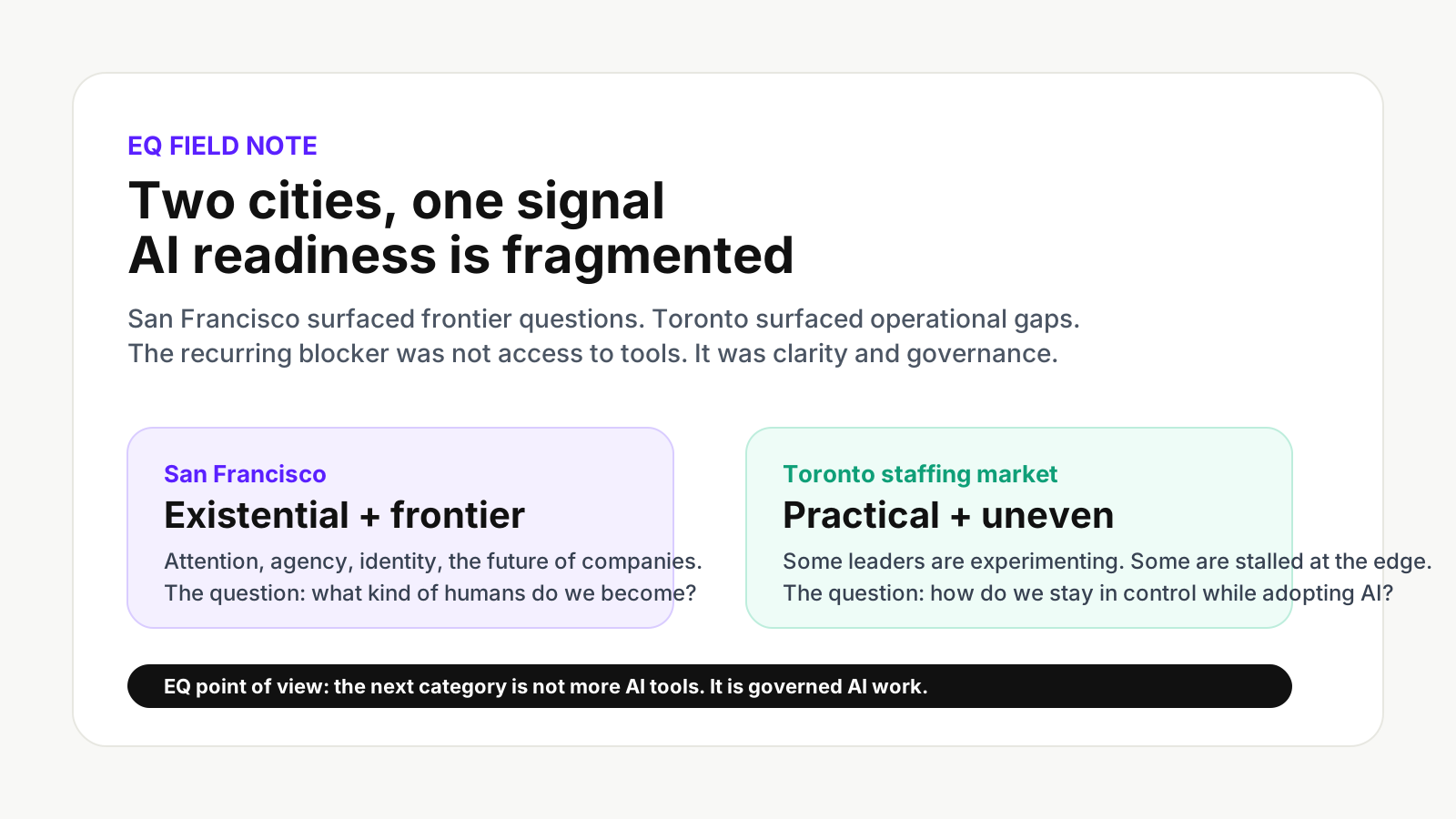
For staffing leaders, recruiters, operators, founders, and AI transformation teams, the important question is not whether AI can produce more activity. The question is whether the work is visible, governed, and connected to the systems where staffing teams already operate.
When a task moves faster but sits outside the workflow, leaders can lose the audit trail, the handoff, and the context that makes the work safe to scale.
Fast screening is useful when it gives a recruiter a better first pass. It is risky when it becomes a black box that quietly decides who moves forward without a clear record of the criteria.
EQ's point of view
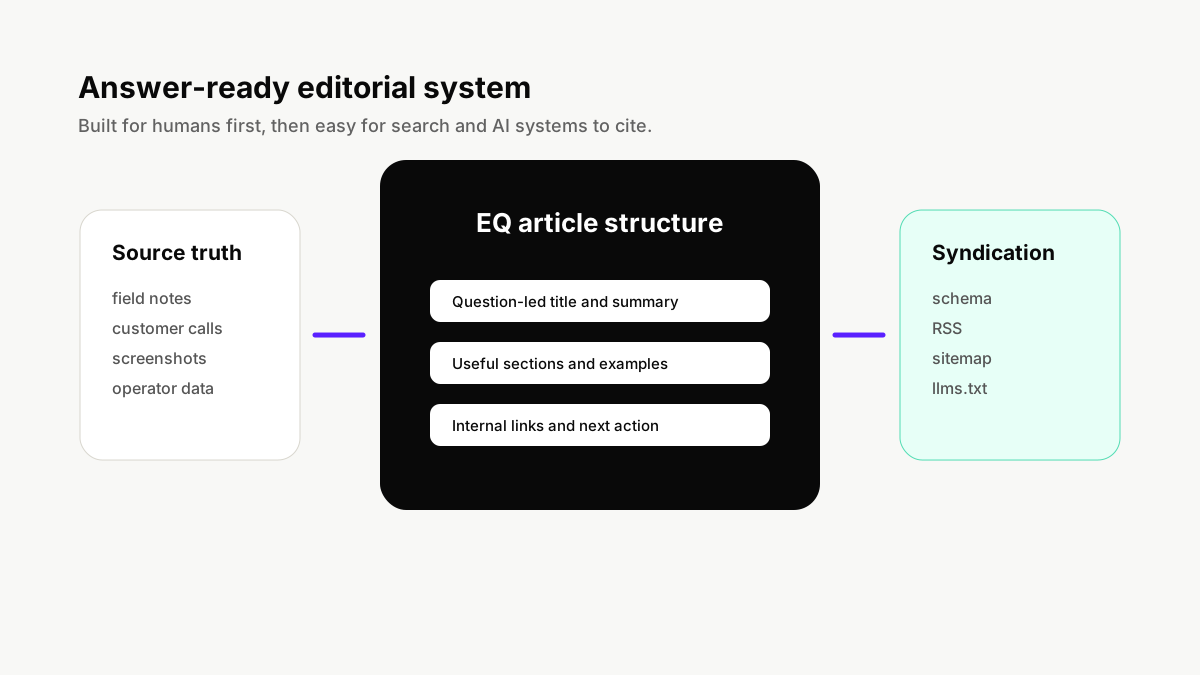
EQ's view is that AI workers should not sit beside the staffing business as disconnected assistants. They should work through a control layer that defines what each worker can read, draft, escalate, and log.
That is how a useful field signal becomes more than a one-off productivity story. It becomes an operating pattern the team can repeat.
For resume screening, that means the worker should know the job requirements, apply visible criteria, flag uncertainty, keep rejected candidates reviewable, and write a clear summary back to the ATS or CRM. The recruiter should not be asked to trust a magic score. They should be given a short, inspectable reason.
What the number does not prove
Screening 500 resumes quickly does not prove fit quality. It does not prove fairness. It does not prove client readiness. It does not prove the ATS record is clean.
It proves there may be leverage in the workflow. The next step is to turn that leverage into an operating system:
- Define the role criteria before the worker screens.
- Require a recruiter review step for borderline or high-value profiles.
- Log the reason a candidate was advanced, held, or rejected.
- Track whether the shortlist led to submissions, interviews, and fills.
- Review false positives and false negatives every week.
That is the difference between a demo and a workflow a firm can defend.
The operating move
Use this story to ask three practical questions:
- Which workflow changed?
- Which system should hold the source of truth?
- What review or escalation rule keeps the work trustworthy?
If the answer is not clear, do not scale the worker yet. Fix the operating rule first.
What EQ would build
EQ would turn the workflow into a governed worker pattern, connect it to the ATS, CRM, inbox, or reporting surface that matters, and keep the output reviewable before it reaches customers or candidates.
The goal is not to screen more resumes for the sake of activity. The goal is to give recruiters more useful time, give managers a cleaner view of the work, and give CEOs confidence that faster work is still accountable work.
Try EQ
EQ helps staffing firms build, integrate, and govern AI workers from one control layer, so the work can move faster without disappearing from the business.