The operator signal
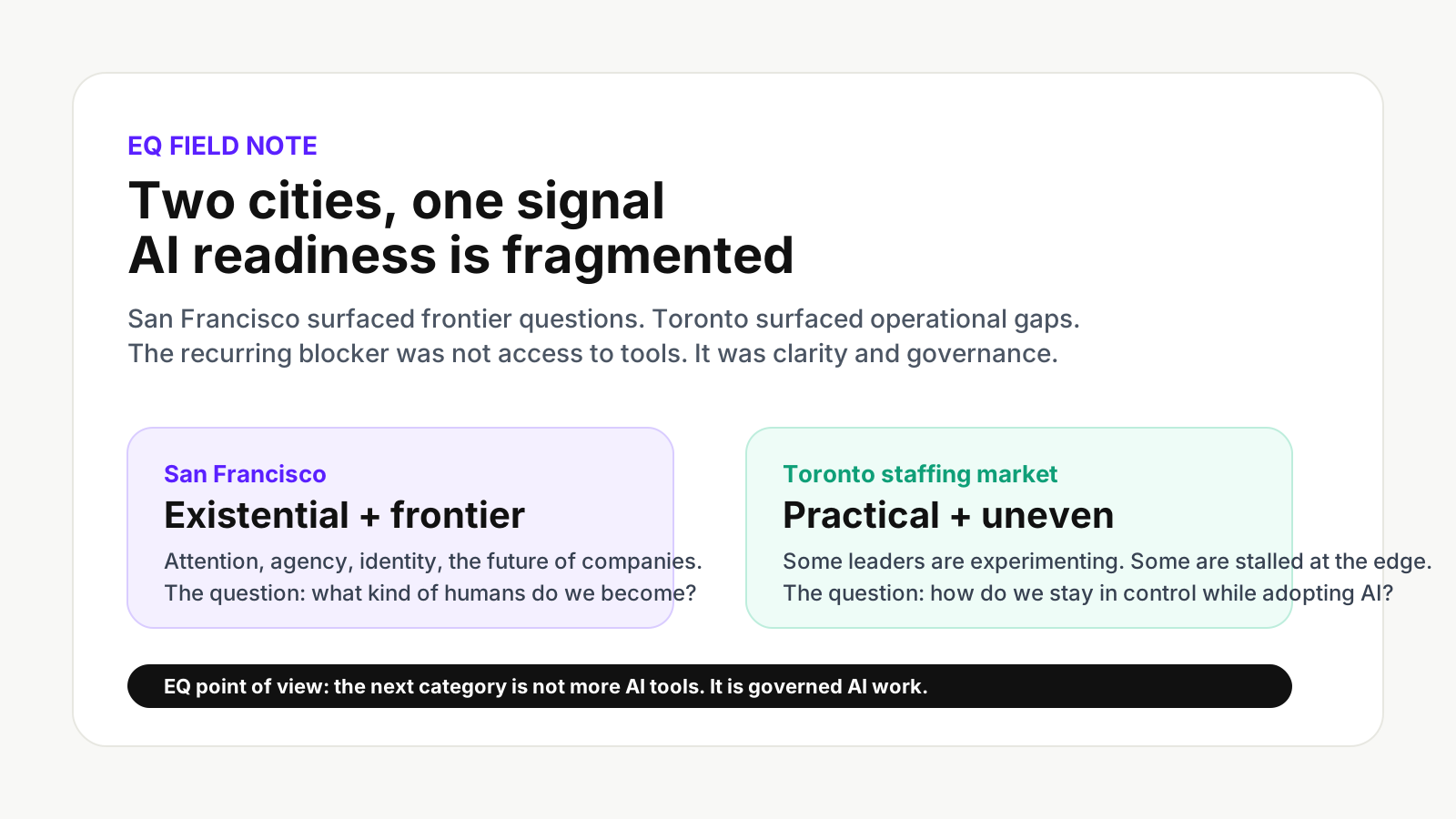
Staffing firms we worked with are not asking for more offshore heads or generic chat assistants. Their recurring problem is operational: middle- and back-office workflows — payroll, approvals, compliance, exception handling — are the bottlenecks that prevent revenue from scaling. Field signals from recent operator work show teams want draft-first, human-reviewed automation that runs inside real systems and leaves clear audit trails.
Why a CEO should care
Most staffing leaders still equate AI with recruiter copilots or labor arbitrage. That misses where measurable ROI appears: reducing manual hours in timesheet validation, shortening approval cycle time, lowering exception rates, and producing reliable audit logs for compliance. These outputs are measurable and matter to CFOs and operations leaders.
EQ's point of view
EQ's thesis: the first useful AI workers in staffing are governed execution agents for payroll, approvals, compliance, and exception handling. They must be:
- Operator-controlled. Humans design and approve the flows; the AI worker drafts actions and recommendations.
- System-native. Automations run through the customer’s real systems (ATS, payroll, ERP) rather than living in a separate chat UI.
- Audit-first. Every decision, draft, and human approval is recorded to an immutable log suitable for audits.
- Metric-driven. Pilot success is measured in hours saved, cycle time reduction, and exception-rate change — not number of prompts handled.
Practical use cases
- Timesheet validation: AI worker pre-validates entries, flags anomalies, attaches suggested corrections, and creates a queue for human review.
- Approval routing: Drafted approval requests populate the customer’s approval workflow; operators see the draft, edit if needed, and then publish, with each step recorded.
- Exception taxonomy & escalation: Automated categorization of exceptions plus recommended escalation paths and owners.
- Audit log generation: Structured records for every change, reviewer, and timestamp to reduce time spent compiling compliance reports.
- Weekly operational reporting: Auto-generated reports that combine exceptions, cycle times, and hours saved into an operator dashboard.
The operating move
If you run a staffing back office, start with a narrow, measurable pilot that replaces high-volume, repetitive manual work in payroll or approvals. Do this checklist before you begin:
- Pick the workflow: timesheet validation or approval routing are highest impact.
- Define success metrics: hours saved, average cycle time, exception rate, and number of manual interventions.
- Require draft-first automation: AI proposes actions; humans approve before execution.
- Integrate into real systems: run the automation through your ATS/payroll/ERP APIs.
- Record everything: create an audit trail for each action, change, and approval.
- Run a short pilot window and measure the metrics above.
What EQ would build
If we were operating this at a staffing firm:
- Start with a single high-volume timesheet or approval queue.
- Build an AI worker that validates inputs, attaches evidence, and drafts the system-native approval entry.
- Route drafts to named operators for quick review and approval; require one-click publish.
- Instrument metrics from day one: log time per task, queue wait time, exception type, and manual override rate.
- Use the captured audit logs to speed quarterly compliance checks and to tune the worker’s taxonomies.
EQ point of view, briefly: move from labor arbitrage to AI-governed execution. The staffing front office still needs people; the first durable ROI from AI comes when back-office execution runs reliably, measurably, and under operator control.
The next step
- Run a 4–6 week pilot focused on timesheet validation or approval routing.
- Track hours saved, cycle time, exception rate, and manual overrides.
- If the pilot meets thresholds you set, expand to related queues (onboarding payroll changes, weekly reconciliation).
Keep reading
- AI workers: governance patterns for operator control
- Staffing automation: measuring ROI beyond headcount
Try EQ
See how EQ turns verified staffing signals into operator-controlled launch flows.