Most staffing firms do not have an AI curiosity problem. They have an operating control problem.
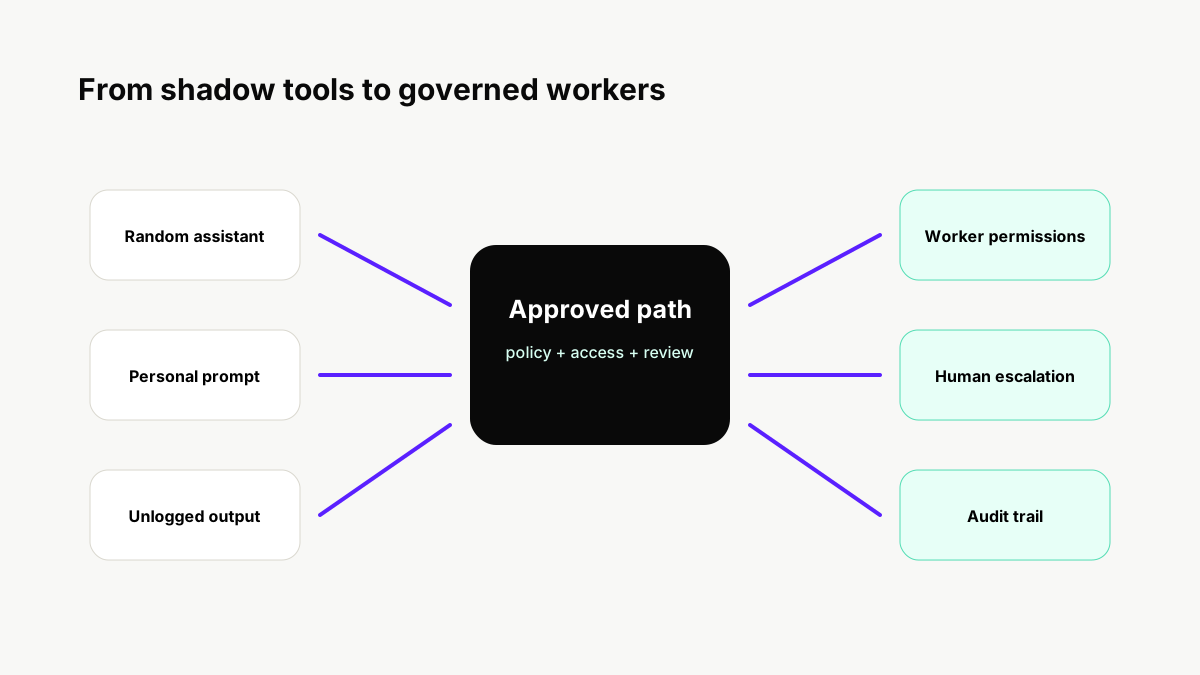
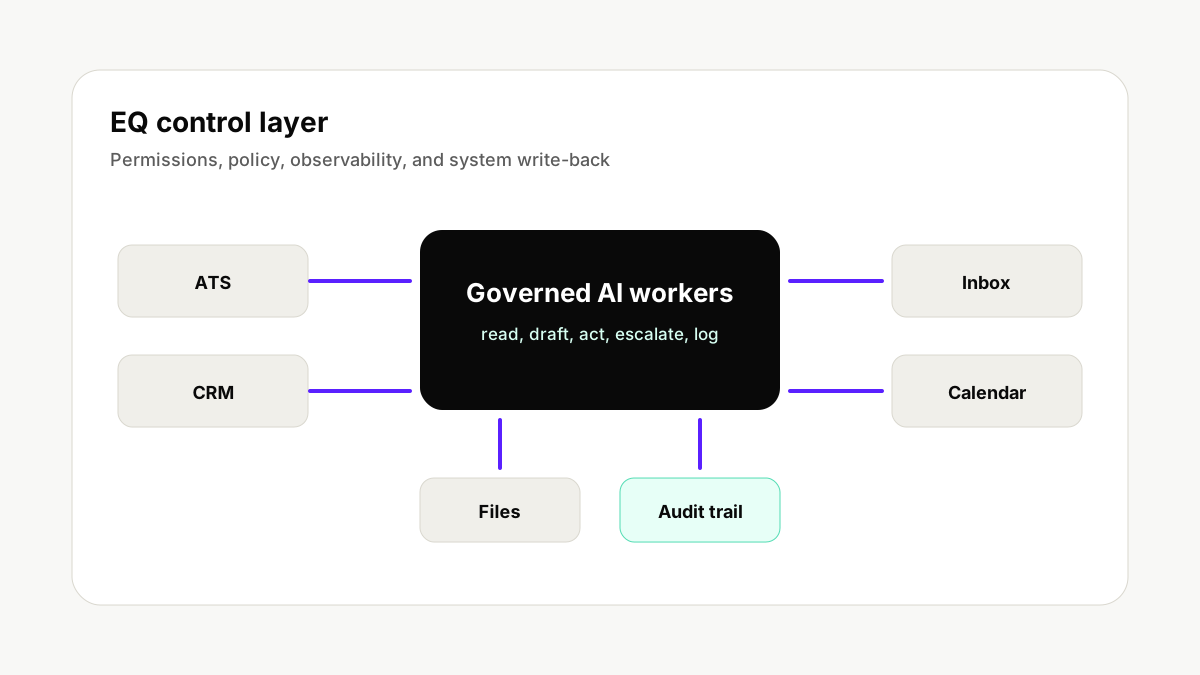
The work is already spread across too many places: ATS records, CRM notes, inbox threads, calendar context, spreadsheets, job boards, files, timesheets, and back-office queues. Then AI arrives, and every team finds a different tool to make one part of the day easier.
That can look like progress. It can also make the business harder to manage.
A recruiter tests one assistant. A manager tries another. Operations builds a workaround. Nobody has one place to see what changed, what was approved, what needs escalation, or whether the output made it back into the system of record.
That is why the control layer matters.
A worker needs a job, not just a prompt
If you hired a person into the business, you would not say, "Go be useful across recruiting."
You would define the job.
AI workers need the same discipline:
- What workflow does this worker own?
- Which systems can it read?
- What can it write?
- When must it ask for review?
- Where is the result recorded?
- How does a manager inspect the work later?
Those are not technical extras. They are the basics that make AI usable in a staffing firm.
Start where the work already has a definition of done
The best first workers are not vague assistants. They are operational teammates with a clear outcome.
Good starting points include:
- refreshing stale candidate records
- deduplicating contacts
- triaging inbound email
- preparing timesheet summaries
- building a first shortlist from a defined intake
- drafting follow-up for recruiter review
These workflows already have inputs, outputs, and review moments. That makes them easier to govern and easier for a CEO to measure.
Did the worker update the record? Did it route the email? Did it escalate the exception? Did it save recruiter time without creating cleanup work downstream?
Those are the questions that matter.
Governance should be built in from day one
Most staffing leaders do not want AI to replace judgment. They want AI to remove repeat admin so judgment can show up where it matters.
That requires human-in-the-loop design. Some actions can happen automatically. Some should be drafted for review. Some should stop and escalate because the confidence is low, the message is sensitive, or the client impact is high.
The operating principle is simple: let the worker do repeatable work, keep humans in control of judgment.
Connect the first loop before connecting everything
The instinct is to connect every system at once. Resist it.
Start where the workflow lives today. For many firms, that means the ATS or CRM first, then email and calendar, then files and reporting destinations.
The first loop should be small enough to inspect:
- read the right context
- do the defined job
- write the result back
- show the audit trail
When that loop works, AI stops being a side experiment and starts becoming part of the operating system.
What EQ would build
EQ's view is that staffing growth changes when AI workers are managed like a workforce, not scattered across browser tabs.
That means a control layer for roles, permissions, review rules, integrations, audit trails, and improvement signals.
The firms that win will not be the ones with the longest tool list. They will be the ones that can say, clearly: this worker owns this job, follows this policy, logs work here, and makes this team faster without making the business less visible.