Shadow AI usually starts with a good employee trying to move faster.
A recruiter finds a tool that writes a cleaner email. A sourcer uses an assistant to summarize a profile. A manager asks a model to make sense of a messy spreadsheet. Nobody is trying to create risk. They are trying to get through the week.
The problem is what leadership cannot see.
What data was pasted? What output was used? Was the client note accurate? Did the candidate information leave an approved system? Did anything get written back to the ATS?
If nobody can answer those questions, the firm does not have AI adoption. It has invisible work.
Do not lead with a lecture
The weakest governance strategy is to tell busy teams to stop using useful tools without giving them a better option.
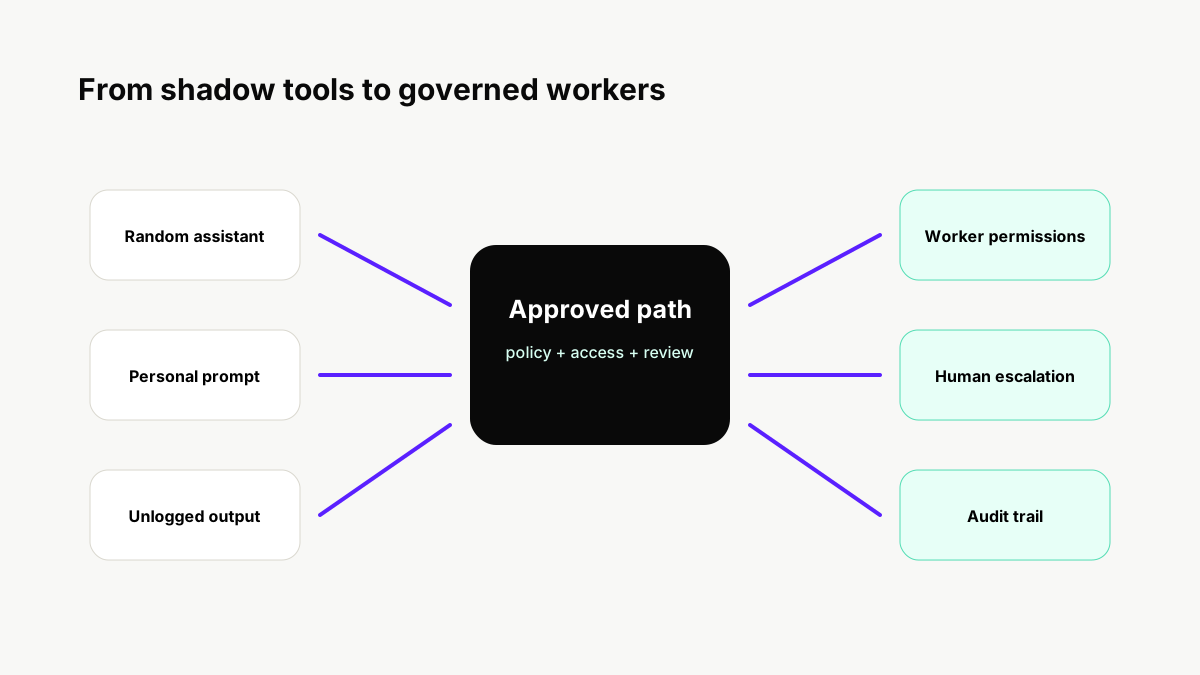
The approved path has to be faster than the workaround.
If an approved AI worker can triage email, refresh records, draft outreach, summarize account context, and escalate exceptions inside the systems the team already uses, people have less reason to paste sensitive information into random tools.
That is the leadership move: make the safe path the easy path.
Govern the worker, not only the platform
Tool approval is too broad.
One AI platform can support a low-risk worker that cleans duplicate records and a higher-risk worker that drafts client outreach. Those jobs need different permissions, review rules, and audit trails.
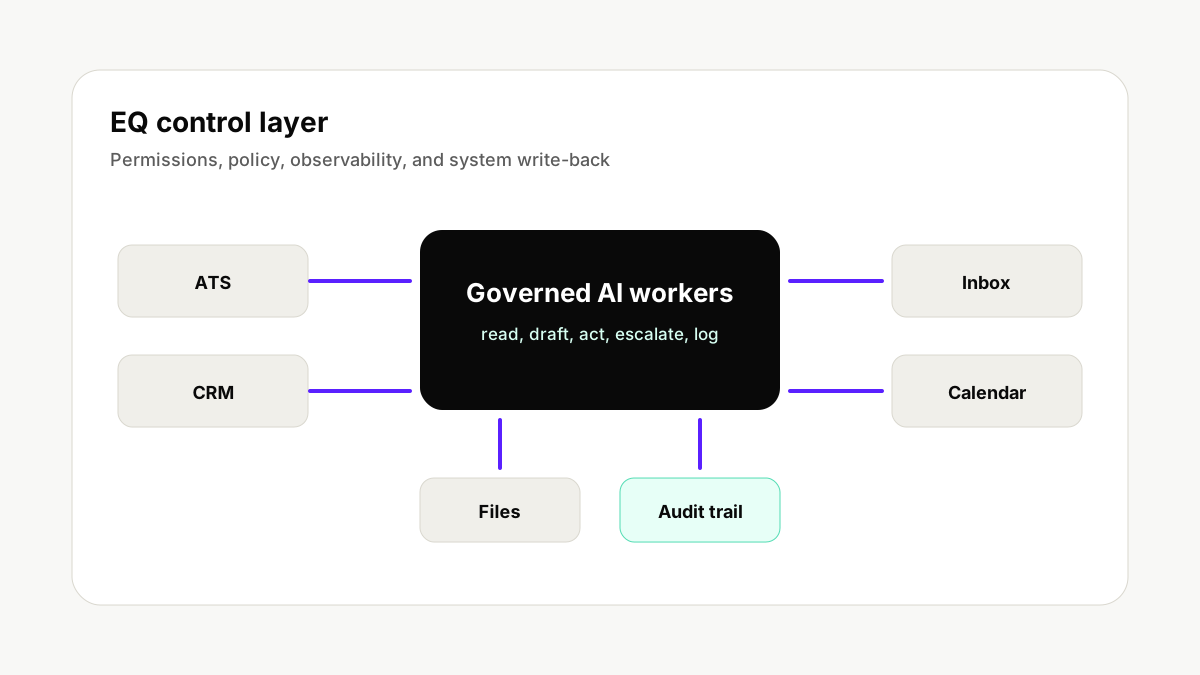
Staffing leaders should define governance at the worker level:
- What job does this worker own?
- What systems can it read?
- What can it write?
- When does a human review?
- What gets logged?
- What is the escalation path?
Those questions are plain enough for operators and specific enough for compliance.
Audit trails create confidence
An audit trail is not there to punish curiosity.
It is there so a leader can understand what changed, so a recruiter can trust the output, and so operations can improve the workflow over time.
A useful trail shows the source, action, reviewer, timestamp, final destination, and exception reason. If the worker made a recommendation, show why. If a human approved it, show who. If the system wrote to the ATS or CRM, show the result.
That visibility turns AI from a side channel into managed work.
Human escalation is part of good design
Some tasks should pause.
A low-confidence candidate match, a sensitive client email, a compliance detail, or a destructive CRM update should move to a person. That is not failure. That is the design that lets automation operate inside a staffing business without losing trust.
What EQ would build
EQ would start by mapping the AI work already happening in the firm. Then we would turn the most common workarounds into approved workers with permissions, review rules, and logging.
The goal is not to slow the team down.
The goal is to give them a governed way to say yes.