Most staffing content fails for a simple reason: it sounds like it was written for traffic, not for a person with payroll due on Friday.
A CEO does not need another article saying AI will transform recruitment. They need to know which workflow to fix, what risk to watch, what a good first step looks like, and how the decision affects recruiters, clients, candidates, and margin.
That is what answer-ready content should mean. Not a trick. Not a template. A useful page that a human can read, trust, and act on.
Start with the question already being asked
The best article ideas are usually hiding inside the business.
A client asks why follow-up is slow. A recruiter complains that the ATS is full of stale records. A delivery manager cannot explain why a shortlist took three days. A founder notices that AI is being used in side channels with no audit trail.
Those are better starting points than keyword lists because they contain a real decision.
Good staffing articles answer questions like:
- Which recruiter admin tasks should AI workers own first?
- How do we stop shadow AI without slowing the desk?
- What should happen before an AI worker updates the ATS?
- How do we measure whether automation improved fill speed or just created more activity?
If the question is real, the article has a chance to be useful.
Add the part only your company can say
Generic content explains the category. Strong content explains what you have learned.
For EQ, the point of view is straightforward: staffing firms do not need more disconnected AI tools. They need governed AI workers that operate inside real workflows, connect to systems of record, and leave a decision trail.
That view should show up in the writing. It should be clear enough that a reader could disagree with it. Bland agreement is not a strategy.
Make the page easy to use
Helpful content still needs structure.
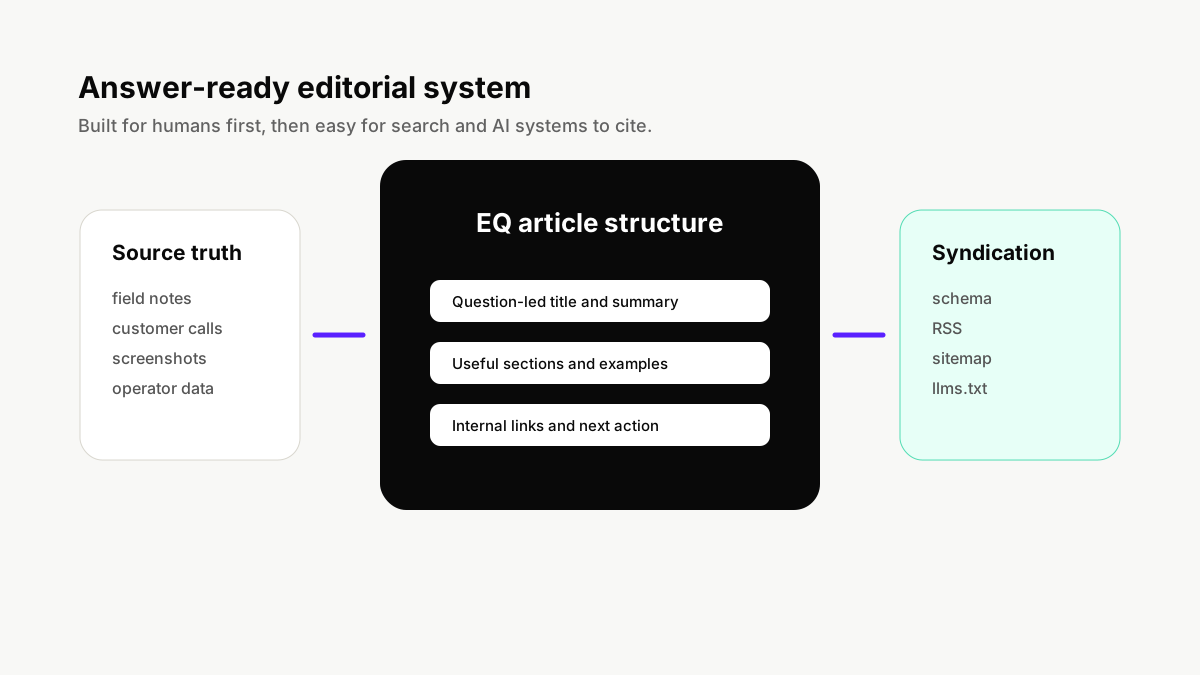
Use a plain title. Say who wrote it. Add a useful description. Break the article into sections a busy operator can scan. Use images when they show the workflow, not because the page needs decoration. Add related links so the reader can keep moving through the library.
This helps search systems understand the page. More importantly, it helps a CEO forward the article to a team lead with a note like: "This is what I mean. Let's start here."
Avoid the content factory trap
Publishing more is not the same as becoming more useful.
Google's helpful-content guidance is a good editorial gut check: is the page original, complete enough, trustworthy, and written for the audience you actually serve? Would someone bookmark it? Would it save them a second search?
Those are better questions than "did we hit the keyword?"
For staffing firms, the best library is smaller and sharper: field notes, workflow breakdowns, product lessons, buyer questions, implementation guides, and founder observations from real work.
What EQ would build
EQ would build the publishing process around source material first: voice notes, screenshots, customer questions, workflow audits, and team observations. The AI can help draft and structure the page, but the story has to come from the work.
The test before publishing is simple:
Would a staffing CEO feel clearer after reading this?
If yes, publish it on EQ first. Then distribute it everywhere else.