Recruiter productivity is usually discussed as activity: calls, submissions, interviews, fills.
That is only half the story.
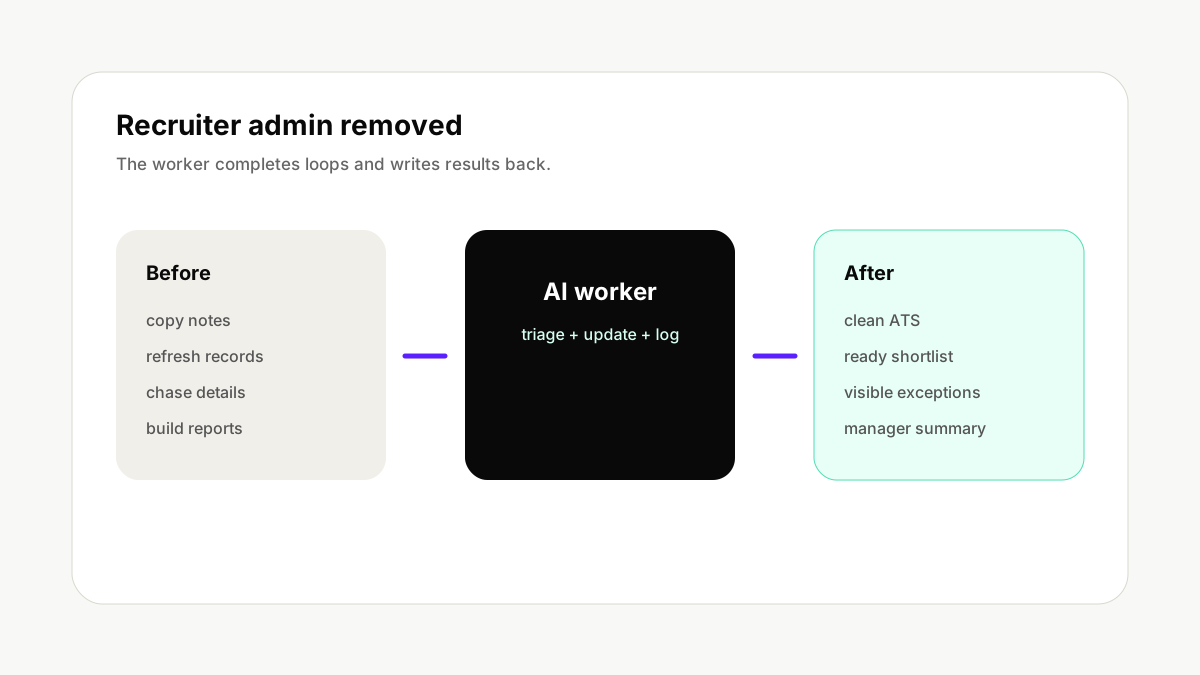
The other half is the admin that sits between every useful action. Find the latest client note. Clean the candidate record. Check whether the same person already exists in the ATS. Route the inbound email. Build the first shortlist. Prepare the manager update. Chase the missing detail before a handoff.
None of that feels dramatic. Together, it eats the desk.
The hidden time traps
Ask a recruiter where the week went and you will rarely hear one big problem. You will hear a chain of small ones.
A candidate has three versions of the same phone number. A client reply sits in the wrong inbox. A hot req has a stale shortlist. A manager wants a report that exists only after someone copies data from three systems.
That is where AI workers can help first.
The early wins are not glamorous:
- refresh candidate and contact records
- route inbound client and candidate messages
- prepare first-pass shortlists
- summarize job and account context
- draft follow-up for review
- surface exceptions before they become delays
For a CEO, these are margin problems hiding as admin problems.
A worker has to complete the loop
A chat summary is not enough.
If a recruiter has to copy the summary into the ATS, create the task, update the note, and tell the manager what changed, the AI has only moved the bottleneck.
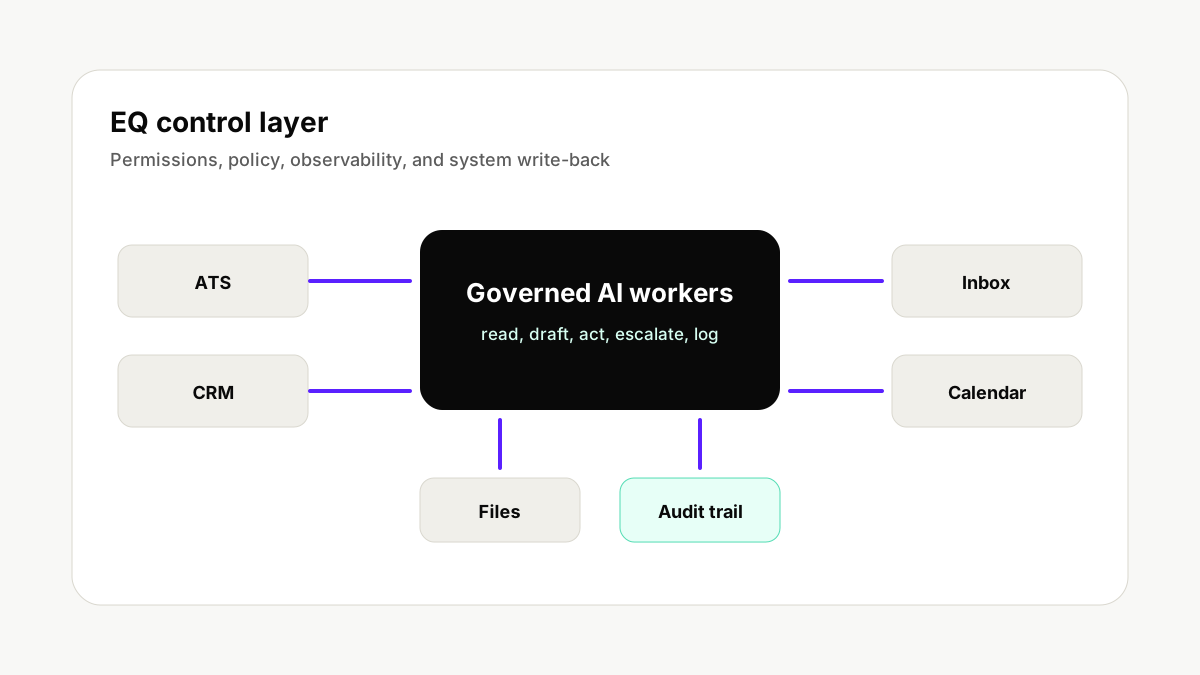
A real worker completes the loop. It reads from approved systems, prepares the output, asks for review when needed, writes the result back, and logs what happened.
That is the line between "AI helped me think" and "AI removed work from the desk."
Measure what changed
Do not measure AI adoption by the number of prompts people run.
Measure operational movement:
- Did stale records go down?
- Did client requests reach the right recruiter faster?
- Did shortlists arrive sooner?
- Did recruiters spend more time with candidates?
- Did managers get cleaner visibility into stuck work?
- Did the worker reduce rework, or create more of it?
Those questions make the productivity story real.
If an inbox worker routed 400 messages, the useful question is how many client requests were handled faster. If a data worker refreshed 2,000 records, the useful question is whether recruiters trusted the database more.
The human work gets sharper
The goal is not to remove recruiters from recruiting.
The goal is to stop making recruiters behave like system administrators.
Recruiting still depends on trust, timing, persuasion, market knowledge, and judgment. AI workers should protect more of the recruiter's day for that work.
What EQ would build
EQ would start with the recurring admin loops around the desk: inbox, records, shortlist, follow-up, and reporting. Each worker would have a defined job, a review rule, a system of record, and a visible audit trail.
That is how productivity becomes more than a dashboard claim.
It becomes fewer clicks, cleaner records, faster handoffs, and more time spent on the conversations that actually fill roles.