The first AI worker should not begin with a 90-day transformation plan.
It should begin with one annoying workflow that everyone already understands.
A stale candidate record. A client email that gets routed too late. A weekly report built by hand. Timesheets that need checking before payroll. A shortlist that takes too long because the same context has to be rebuilt every time.
That is enough to start.
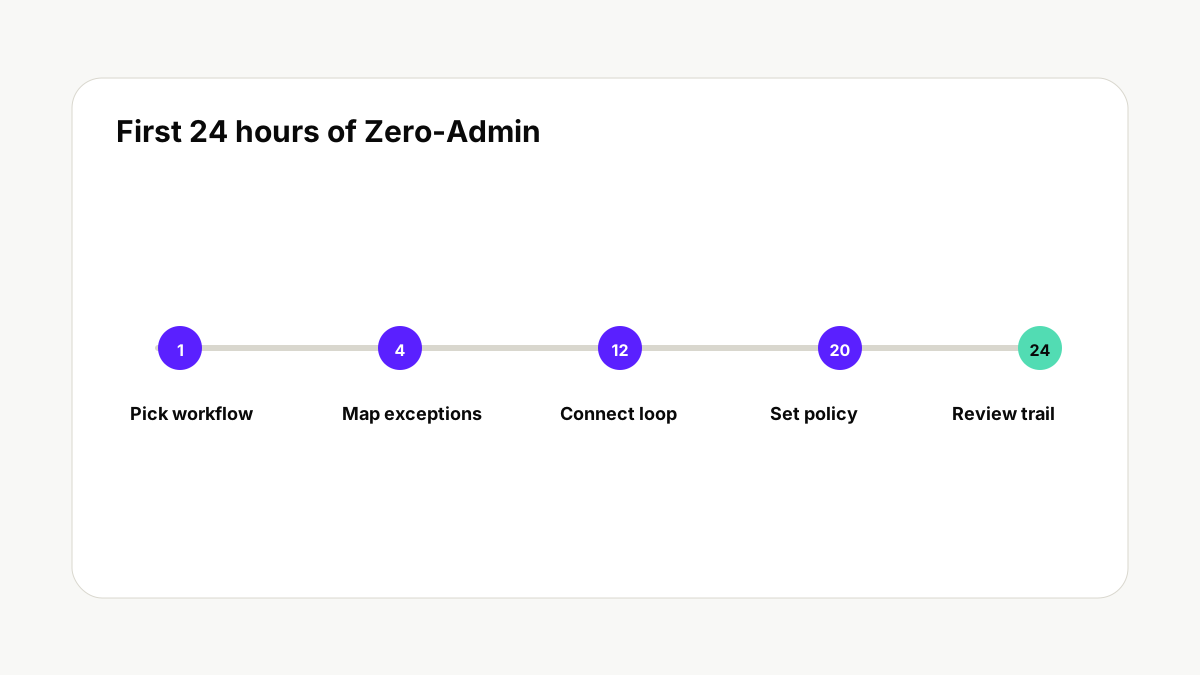
Hour 1: pick the workflow with the cleanest pain
The best first workflow is repetitive, frequent, and easy to verify.
Do not pick the most impressive demo. Pick the work that steals time every week and has a clear before-and-after state.
Good first candidates:
- stale candidate records become refreshed records
- inbound client emails become routed opportunities
- weekly timesheets become ready-to-review summaries
- a job intake becomes a first shortlist
- a manager update becomes a clean report
For a CEO, the test is simple: if this worked every day, would the team feel it?
Hours 2-4: map inputs, actions, and exceptions
The workflow map should fit on one page.
Name the inputs: ATS fields, CRM notes, inbox messages, calendar context, files, spreadsheets, or reporting surfaces.
Name the actions: summarize, enrich, draft, route, update, flag, or prepare.
Name the exceptions: low confidence, missing data, sensitive client message, compliance concern, destructive update, or anything that should pause for a human.
Then name the output. Where does the result land? If the answer is "in a chat window," the loop is not finished.
Hours 5-12: connect the smallest real loop
The goal is not to connect the whole business on day one.
The goal is to prove one loop:
- Read the right source.
- Do the defined job.
- Ask for review when needed.
- Write the result back.
- Leave an audit trail.
For many staffing firms, the first connection should be one ATS or CRM object, one inbox workflow, and one reporting destination. Keep it small enough that the team can inspect it.
Hours 13-20: set the review rules
Policy is what turns AI from a shortcut into an operation.
Decide what the worker can do alone, what it can draft, and what it must escalate.
For example:
- A record refresh can be suggested automatically, but low-confidence changes require review.
- A client follow-up can be drafted, but not sent until a recruiter approves it.
- A timesheet exception can be flagged, but payroll approval stays with a named operator.
This is the part CEOs should care about. The review rule is where speed and trust meet.
Hours 21-24: inspect the first real work
The final step is not a launch announcement.
It is a review of what actually happened.
Look at the output. Look at what changed in the system of record. Look at the escalations. Look at where the worker hesitated. Look at whether the recruiter or operator trusted the result.
Those details tell you whether the workflow is ready to scale.
What EQ would build
EQ would turn the first 24 hours into a repeatable operating pattern: workflow audit, worker job card, system connection, review rule, live run, audit inspection.
Zero-Admin does not mean zero oversight.
It means admin work stops consuming the humans who should be building relationships, filling roles, and protecting customer trust.